Sunday, August 7, 2011

Cherry Cannons


Due to our cool June and July weather, the cherry harvest has extended into August in our valley. As the last of the year's crop is harvested, our late summer days are filled with the distant muffled pop and poof of cherry cannons. They go off throughout the day to deter birds from swooping in to feast on the red fleshy fruit.

It's a soft subtle sound that you don't notice so much after a while. But every now and then, during a quiet pause, you hear them and think...cherries.

Red
Ripe
Sweet
Cherries

I'm sure the cherry cannons subliminally led me to stop in at the local organic farm down the road from us.

It's not your standard farm stand catering to drive up customers. There are no displays of fruit or a counter to walk up to. It's just a big, old packing house. My visit went something like this:

What do you have for fruit right now? Are peaches in?

No, we'll be picking peaches next week. We just have cherries right now.


Yes, of course, cherries. What's the smallest quantity of cherries I can buy?

20 pounds.

I thought, 'no, too much', but said, 'yes, I'll take twenty pounds of cherries.' 

They've just been picked, so they're still warm and may have some leaves mixed in...is that okay?

Just picked is good, sun warmed is perfect. 

cherries on pancakes
cherries for snack
cherries for lunch
cherries for dessert

We cleaned, pitted and froze about 15 pounds.

Perhaps we'll have cherries for Christmas like our Australian friends.

Link Love No.64!

I went to a wedding reception tonight (actually, it was Mr. TRH's cousin's). It was an outside reception, and I think all the decorations and such were done by the bride’s mom, and sisters, and they were done so beautifully. After the sky grew darker, many white Christmas lights came on. With the night breeze, candle lights, and people’s laughter, it all made the atmosphere so pleasant… it was such a magical place to be.

I do a link party every week, and seeing all your entries made me realize that lots of times we create things for our loved ones. Using our creativity to make someone happy or to bring people together is the greatest part of being creative, don’t you think?

I thought that a lot at tonight’s reception... great job girls!

Ok, here are the link loves for this week...

Do you have a long hair (I do!) you don't know how to style sometimes? Raisisng 4 Princesses invited her sister to share a great tutorial for a braided up do style. I love how this looks so feminine and romantic. Don't you think it is perfect for summer? I might need some practice; I want to give it a try!


I just finished school supply shopping last week, but I might have to buy a few more things. Then, I thought about going back to the routine of making school lunches... mmm don't they get boring sometimes? My kids ask me to buy lunchables all the time (or bring kids meal from fast food places) NO WAY! Well, Mommy Minded shared some lunch ideas with us. Homemade lunchables? How fun!


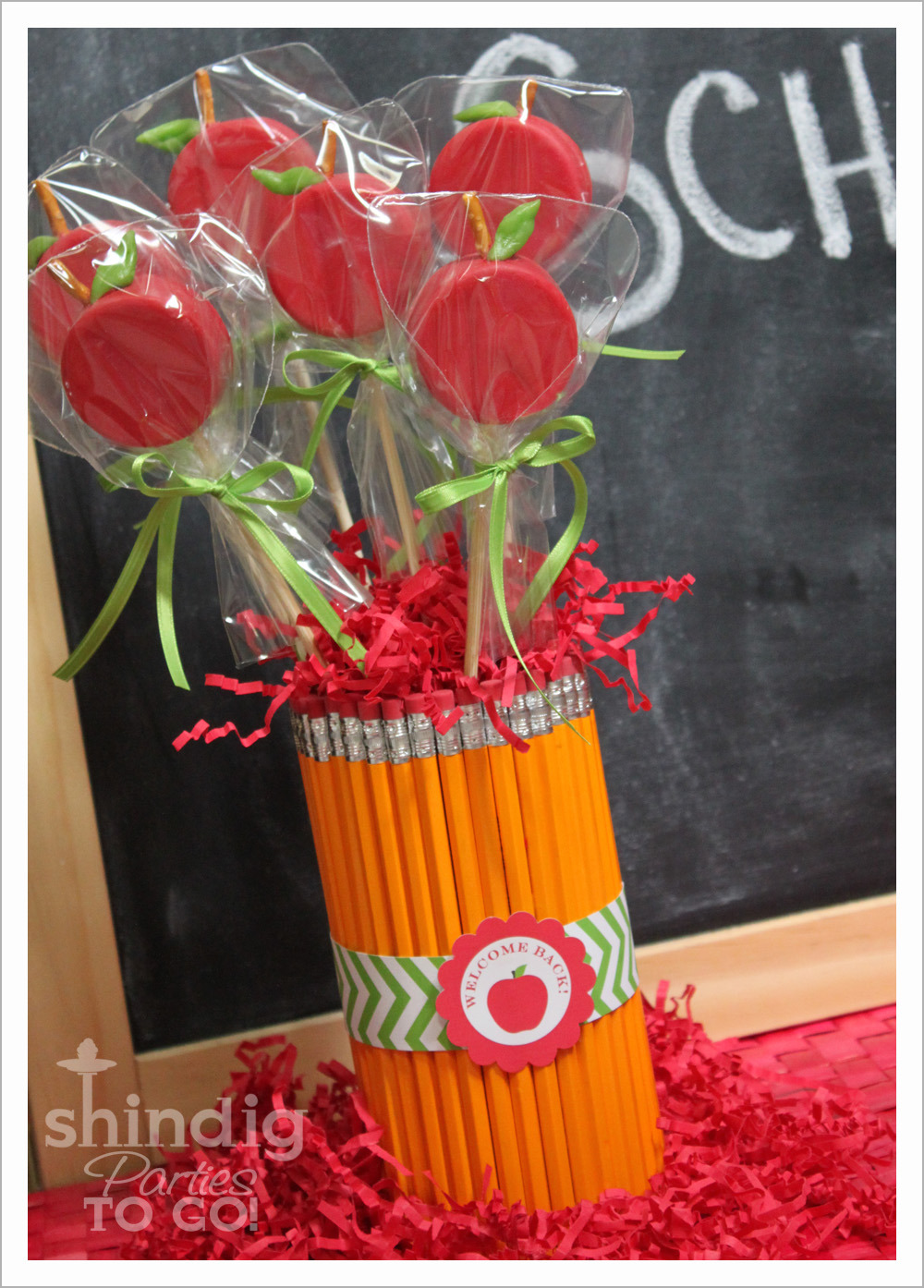
Another great idea for back to school is the Apple Oreo Pops by Parders. She shows a step by step on her blog, and it is a very fun process. The results? They look so sweet that I’m salivating!


It is in the air... sometimes I can feel it. Fall is getting closer, it is just around the corner. I don't like seeing Halloween and Christmas stuff at the stores now, but I just fell in LOVE with this owl hat! Paper Dandelionshares a pattern on her blog, you can start making some now! So cute!


At Second Street created this maxi dress (she drafted a pattern too!). Because of the simplicity, it is versatile; you can coordinate with many things. Go check out her great tutorial to see how she did it. I am already thinking about maxi dresses for fall!!


Thank you all for making this link party possible! Happy creating ;)

Friday, August 5, 2011

Lily Bird Design Giveaway Winner!

I posted the winner for the Lily Bird Studio giveaway on my sponsor's page, headover and check to see if you are the lucky one!

AFTER THE CORAL BLEACHING, THE WINNER IS...

The winners: Acropora corals. Credit: Albert Kok at Wikimedia Commons. 
  
After 14 years of tracking coral colonies at Sesoko Island, Okinawa, Japan, through two coral bleaching episodes—1998 and 2001—the big coral winners and losers on the reef have been announced...

  • The winners: Porites, faviids, and Acropora colonies
  • The losers: pocilloporids

Except it's not that simple, the authors of a new study warn. Since 14 years is hardly the long long run.

The losers: Pocillopora corals. Credit: Mila Zinkova at Wikimedia Commons.
  
In a new paper in the current issue of MEPS we get a sense of what happens in the short long run after of a big coral bleaching event. 

Background: Coral bleaching occurs when water temperatures rise, stressing the coral animals enough to expel their symbiotic partners—the zooxanthellae. These single-celled plants give corals their beautiful colors and help feed them through photosynthesis (as if we could grow rice inside our bodies). In some plant-animal partnerships, the zooxanthellae entirely feed their corals.

Zooxanthellae (yellowish streaks) cells embedded in coral polyps. Via.


In the past 30 years, rising sea surface temperatures have stressed and bleached corals worldwide. 

Yet few researchers have looked at what recovery looks like over time—whether the species of corals that fare better in the short term also fare better in the long term.

A partially bleached faviid coral. Credit: Nhobgood at Wikimedia Commons.

At Sesoko Island, the researchers found that although species richness recovered after 10 years, the composition of coral species on the reef had changed. The pocilloporids were nearly completely gone. Among their other findings:

  • Short-term winners were generally thermally tolerant encrusting and massive corals, like Porites and faviids and small (<5 cm/2 in) Acropora colonies. 
  • Ten years after the bleaching the community was still structurally different, consisting of a combination of survivors that were either:
  1. Tolerant to heat stress
  2. Surviving as fragments of colonies that experienced rapid regrowth 
  3. Regionally persistent colonies that recruited locally

Credit: R. van Woesik, et al. MEPS. DOI:10.3354/meps09203.

  
The last point is interesting because it means that having healthy reef neighbors enabled some species to recover—thanks to seeding from nearby islands. 

Yet even the short long term winners may not survive the long long term. The authors close with these strongly cautionary words: 

The present study suggests that as the oceans warm even further, the coral assemblages will change. Reefs may soon essentially only support heat-tolerant coral species. The narrowing of genetic diversity within communities is likely to impact other dependent species such as fishes and crustaceans, especially if important reef-building branched corals, such as Acropora, Stylophora, Pocillopora, and Porites cylindrica, become rare on account of their inherent sensitivity to thermal stress. Bleaching may also become punctuated over the next several decades. In the short term, the remnant yet hardy populations may show some resistance to the higher water temperatures, and bleaching may be reduced for a decade or more if Acropora and pocilloporids are removed from local reefs. However, reduced bleaching may give false hope because once the inevitable temperature threshold of the remnant communities is surpassed, widespread coral mortality will follow. Given that even the hardiest coral genera have their limits, global temperature increases will eventually lead to an exponential rate of local, regional and global reduction of coral species. To what extent this reduction of coral species will occur will depend on how rapidly and by how much the ocean temperatures increase, which depends on the fossil-fuel-emission pathway that humans choose.
  
Coral recovery underway on a reef. Credit: Bruno de Giusti at Wikimedia Commons.


The paper:

  • van Woesik R, Sakai K, Ganase A, Loya Y (2011) Revisiting the winners and the losers a decade after coral bleaching. Mar Ecol Prog Ser 434:67-76. DOI:10.3354/meps09203.

Dare to Design ~ Design for Shabby Apple~

Where have I been? I just noticed that Shabby Apple has had a design contest since June! I had no idea that was going on and since it is due on the 10th, there is no way that I can come up with something new right now... but, I really want to enter this dress I created for a while ago... the Ivory Sunlight Dress.


Well, the dress totally matches what they are looking for... it is a modest design, has sleeves, no cleavage showing, and it is longer than knee length. And, I made it for the Spring/Summer season.

My design inspiration came from JCrew, but the dress was showing a lot more skin than I prefer, so I changed and tweaked the idea and created a different dress. Do you think this dress fits with other Shabby Apple Dresses? I think it does!

If my dress is one of the top 15 entries, it will be posted on the Shabby Apple blog by August 17th. IF, IF that happens, would you, could you my blogger friends be there to vote and support me? It is a little scary, but I think I am gonna try it.


I used 100% cotton; it is textured, very light weight almost like gauze fabric. I found it at Joann's for 6.99/yd. I used my 40% off coupon for three yards of fabric, so my version of the dress cost me about $13.00! Because I wanted to make it for every day wear, cotton is a better choice than chiffon for me.


Well my friends wish me luck! :)

Thursday, August 4, 2011

WHERE WHALES WANDER

Sperm whales. Credit: NOAA.
    
A new paper in MEPS (Marine Ecology Progress Series) describes for the first time the communities—villages, in a sense—of whales and dolphins living offshore in the northwest Atlantic and the Gulf of Mexico.

This is a mind-bogglingly difficult thing to assess, as you might imagine, in a world beyond our sight and wildly three-dimensional... where far-from-still waters run hundreds if not thousands of meters/feet deep. As the authors dryly observe:

Data collection on the distribution and abundance of marine mammals is costly, time consuming and complicated by logistical difficulties.

Humpback whales. Credit: NOAA.
   
Nevertheless, this team of 15 researchers—themselves clustered along the East Coast, with one outlier in the Bahamas—availed themselves of an archive of datasets on cetacean distribution and abundance. These covered the waters from Nova Scotia to the Gulf of Mexico.

Specifically, the team used OBIS-SEAMAP sightings, collected over many years from vessels both at sea and in the air during the summer months of June, July, and August.

Marine mammal sightings 1990-2010. Credit: OBIS-SEAMAP.

 
Duke University's OBIS-SEAMAP (Ocean Biogeographic Information System—Spatial Ecological Analysis of Megavertebrate Populations) is a seriously cool tool. Above is a map I generated for marine mammal sights between 1990-2010. You can play around with the datasets—which include seabirds and sea turtles too—and generate your own maps.

The authors were looking for signs of community structure at really large spatial scales, on the order of thousands of kilometers/miles. And they found it.

The regions North of Hatteras (NOH) and South of Hatteras (SOH). (a) Overview. (b) Sampling hexagons (NOH: light grey; SOH: dark grey). Sightings are depicted at the taxonomic guild level with different colors and symbols. Depth contours (200, 500, 1000, 2000 m) in light grey. GOM: Gulf of Mexico. Credit: R. S. Schick, et al. MEPS. DOI:10.3354/meps09183.


This glorious map shows the distribution of 16 species or species clusters (e.g., beaked whales, baleen whales) in waters North of Cape Hatteras and south of Cape Hatteras. Depth contours are included—though you can't really see them on the small map I posted here. For a higher resolution image, download the PDF of the paper.

As you can see, things get seriously busy up there in the colder, productive waters north of Cape Hatteras, where harbor porpoises and baleen whales rule, where bottlenose dolphins own the inshore realm, and where toothed whales work the drop-offs to the deep. These waters also had the biggest datasets.

And take a look at the map above and the fascinating zigzag distribution of Atlantic spotted dolphins (blue dots)—running back and forth across the Gulf Stream to the south of Cape Hatteras. Having worked many years filming those guys in the Bahamas, I find it really exciting now to see a bigger picture.

The Gulf of Mexico (GOM). (a) Overview. (b) Sampling hexagons in light grey. Sightings are depicted at the taxonomic guild level with different colors and symbols. Depth contours (200, 500, 1000, 2000 m) in light grey. Credit: R. S. Schick, et al. MEPS. DOI:10.3354/meps09183.


Turns out the spotted dolphins living in the Gulf of Mexico are distributed much like those along the Gulf Stream—zigzagging inshore and offshore from Mobile Bay to the Florida Keys (above).

You can also see how many species—Risso's dolphins, sperm whales, common dolphins, bottlenose dolphins, and killer whales—congregate in the waters enriched by the Mississippi River. Also the disaster site of last year's Deepwater Horizon blowout.


Sea surface temperatures on 4 Aug 2011 at 0756 GMT. Credit: NOAA, Rutgers University Coastal Ocean Observation Lab

The researchers connected the position of each sighting with each of seven environmental layers:

  1. Sea surface temperature (SST)
  2. Chlorophyll a concentration [a mark of ocean productivity]
  3. Bottom depth
  4. Distance to continental shelf (defined by the 200 m isobath)
  5. Distance to shore
  6. Probability of an SST front [a place where water masses of different water temperatures meet]
  7. Depth of the mixed layer (MLD)

Killer whales. Credit: NOAA.
 
The overall findings for the three biogeographic regions are interesting:

North of Hatteras, we found 2 main groups split along a temperature and chlorophyll [indicating phytoplankton abundance] gradient, with most piscivores [fish-eaters] being found in cooler, more productive waters of the continental shelf, and most teuthivores [squid-eaters] being found farther offshore in warmer, less productive waters at the shelf break (200 m isobath). South of Hatteras, we found 3 groups, with the largest group being in warmer, lower chlorophyll waters that are closest to shore. In the Gulf of Mexico, we found 7 groups arrayed along a bottom depth gradient.

The Domesday Book on display at Britain's National Archives.

  
To my mind, this paper is the ocean equivalent of Britain's Domesday Book, the great survey concluded in the year 1086 of much of England and parts of Wales. That effort provided a snapshot of the geography of human habitation and ownership at the time. This paper delivers something of the same for the shifting villages of ocean nomads—travellers in a fluidly moving realm.

The paper:

  • ♥ Schick RS, Halpin PN, Read AJ, Urban DL and others (2011) Community structure in pelagic marine mammals at large spatial scales. Mar Ecol Prog Ser 434:165-181. DOI: 10.3354/meps0918.

♥ Open-access paper.

Common dolphins. Credit: NOAA.