Showing posts with label art. Show all posts

Wednesday, August 22, 2012

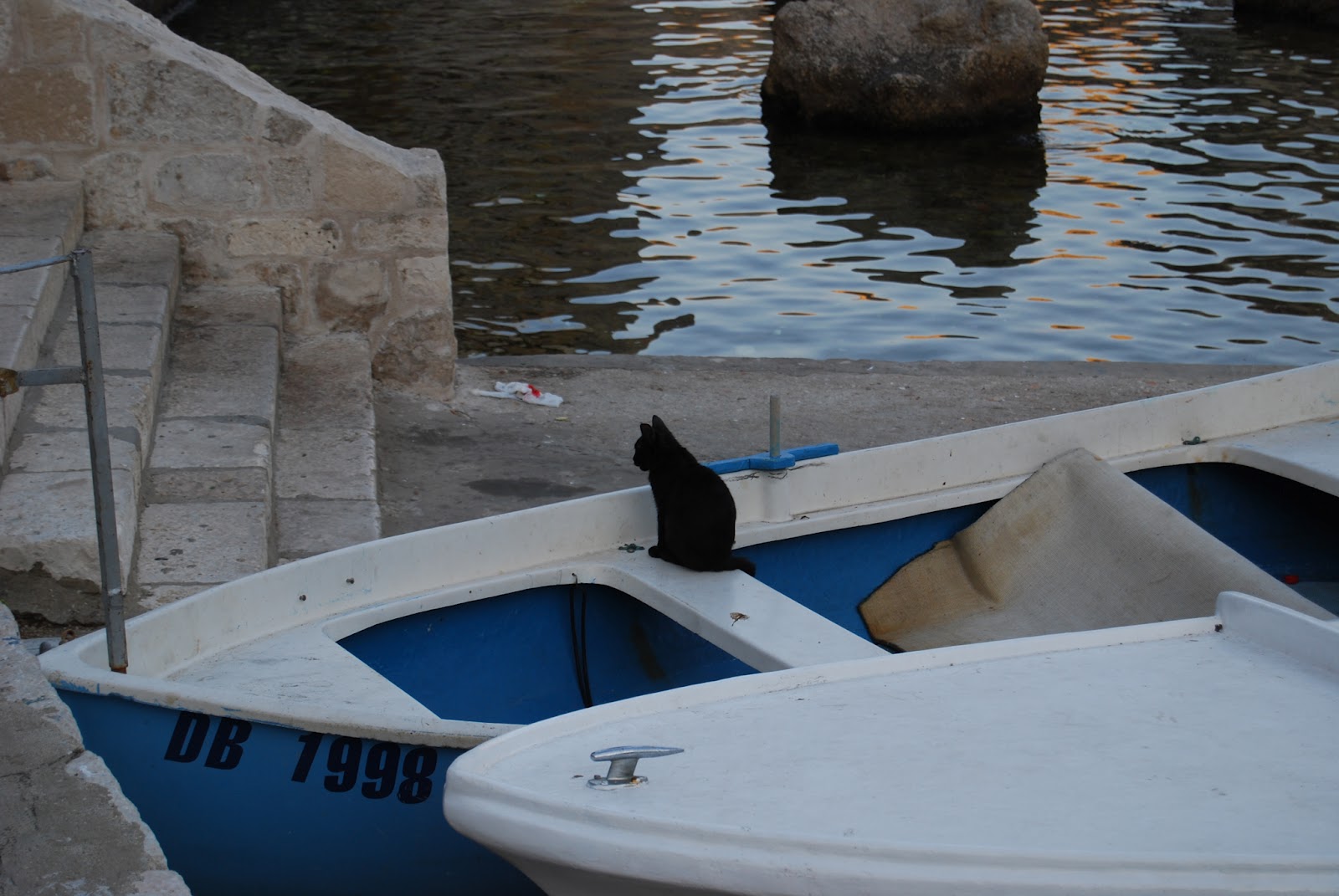
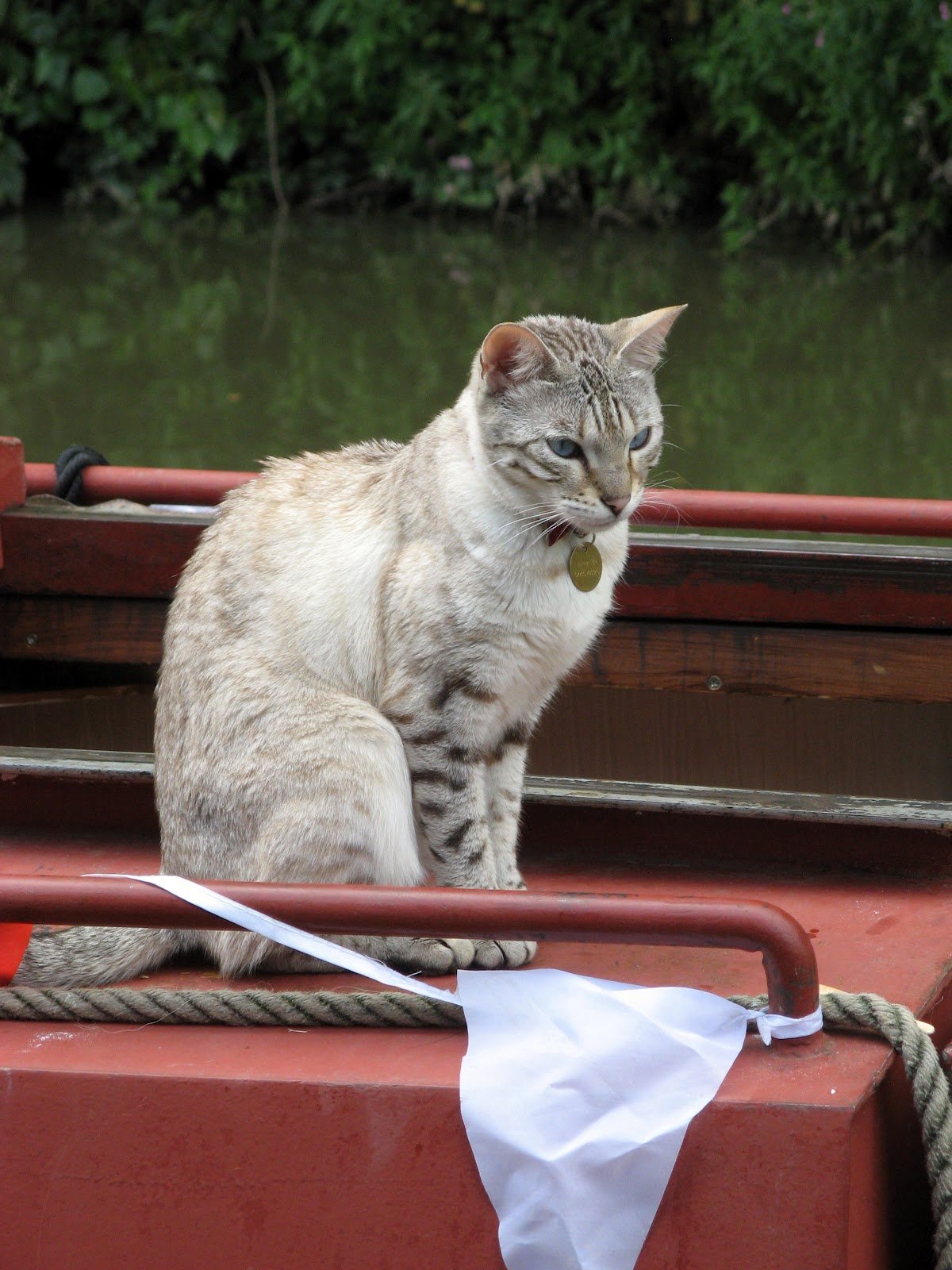
CATS ON BOATS

For felines afloat, it's all about the inner voyage.
_______________________________________________________________________

hc gilje via Flickr
  
antb via Flickr
  
popopopopopkokoko via Flickr

A. Davey via Flickr

  
plums_deify via Flickr


Konabish ~ Greg Bishop via Flickr


A. Davey via Flickr

jamesjustin via Flickr

jonworth-eu via Flickr
  
Andrew Batram via Flickr
  
takahito via Flickr


Voyage, Jean-Michel Folon, Citygarden, Saint Louis. Photo credit: clio 1789 via Flickr.

Monday, July 9, 2012

WAVE BUOY SCULPTURE

A sculpture responding to wave height data recorded by NOAA's buoy 46246 in the North Pacific.
_________________________________________________________________
  

tele-present water from david bowen on Vimeo.
  

Monday, May 14, 2012

THIS IS BETTER THAN MONDAY MORNING


Dream from 'The Glide,' Images by Jon Frank. Music by Richard Tognetti. from Jon Frank on Vimeo.


Sequence from 'The Glide,' a concert performance featuring video projections behind live orchestra. Premiered at Festival Maribor in 2009 and also performed by the Australian Chamber Orchestra in a series of three concerts in Melbourne and Sydney in 2011. www.jonfrank.org


Thursday, May 3, 2012

WAVES

A sculptural ribbon of 3,600 LCD glass tiles animates waveforms of clouds, rain drops, colonies of bacteria, cuttlefish skin, flocking birds, geese, and pulsating black holes.
_______________________________________________________________


Patterned by Nature from Sosolimited on Vimeo.


Friday, December 16, 2011

CIGARETTE CARD ARCTIC

These views of the Arctic are from cigarette cards issued by the Hassan Oriental Cigarette Company between 1900-1917—during the golden age of  polar exploration

The artist is Albert Operti, an Italian who accompanied Robert Peary on his 1896 Greenland expedition. 


Operti also painted many scenes of expeditions he was not a part of. As best I can deduce, the ship in this picture, Hansa, is the same supply vessel that came to an untimely end off Greenland during the 1869-1870 Second German North Polar Expedition. From Wikipedia:

As the supply ship, the Hansa followed the Germania [exploration ship] until July 19, when [Captain Paul Friedrich August] Hegemann misread a flag signal by [captain of the Germania, Carl] Koldeway and went ahead; the ship disappeared in the fog and got separated. The agreement was to meet in such a situation at Sabine Island. After unsuccessful attempts to get there, Hansa was inescapably stuck in the pack ice by mid-September 1869. During the next month, the ship was slowly milled by the ice and finally sank on October 22 at a position 70°32’N, 21°W approximately 10 km from the East Greenland coast. The crew managed to survive the winter in a shelter built of coal dust briquettes, while drifting on the sea ice southward along the eastern coast of Greenland. In June 1870, the crew got to the coast by boat and reached the Moravian Herrnhut mission at Narsaq Kujalleq (then Frederiksdal/Friedrichsthal) near Cape Farewell, from where they got back to Germany on a Danish ship.


When he wasn't painting the real and imaginary Arctic, Albert Operti was painting other make-believe stuff. From Visions of the North:

Like many panorama and diorama painters of the nineteenth century, when the Arctic was also a popular subject for such entertainments, Operti had a background in theatrical scene painting, and it was with this work that he was chiefly occupied in the middle years of his life, principally with the [New York] Metropolitan Opera. In the last six years of his life he returned to the [American Museum of Natural History], painting diorama backdrops, murals, and friezes for their exhibitions. During this period, he actually lived in quarters provided by the [New York] Explorers Club, and it was there that he died in 1927.

All images courtesy the New York Public Library Digital Gallery.

Wednesday, October 12, 2011

THE X-RAY ORIGAMI OF TAKAYUKI HORI

   
Takayuki Hori's unique work won first place in the 2010 Mitsubishi Chemical Junior Designer Competition. Using a process called Oritsunagumono—defined as 'things folded and connected'—he portrayed eight endangered Japanese species. The only color in Hori's pieces comes from the ubiquitous marine garbage swallowed by his wild origami birds and reptiles.


Monday, September 26, 2011

HAECKEL'S OCEAN

Actiniae [sea anemones]


Prosobranchia [archaic: snails]


Acsidiae [sea squirts]


Cyrtoidea [archaic: radiolarians]


Chaetopoda [archaic: segmented worms]


Hexacoralla [corals & allies]


Gamochonia [archaic: cephalopods]


Decapoda [crustacean]


Ostraciontes [boxfishes & allies]


Diatomea [diatoms]


Discomedusae [archaic: jellyfish]


Ophiodea [brittle stars]


Cubomedusae [archaic: box jellyfish]


Excerpted from Wikipedia:

Ernst Heinrich Philipp August Haeckel (16 February 1834-9 August 191) was an eminent German biologist, naturalist, philosopher, physician, professor, and artist who discovered, described and named thousands of new species, mapped a genealogical tree relating all life forms, and coined many terms in biology, including anthropogeny, ecology, phylum, phylogeny, stem cell, and the kingdom Protista. Haeckel promoted and popularized Charles Darwin's work in Germany and developed the controversial recapitulation theory ("ontogeny recapitulates phylogeny") claiming that an individual organism's biological development, or ontogeny, parallels and summarizes its species' evolutionary development, or phylogeny.
The published artwork of Haeckel includes over 100 detailed, multi-colour illustrations of animals and sea creatures (see: Kunstformen der Natur, "Art Forms of Nature"). As a philosopher, Ernst Haeckel wrote Die Welträtsel (1895–1899, in English, The Riddle of the Universe, 1901), the genesis for the term "world riddle" (Welträtsel); and Freedom in Science and Teaching to support teaching evolution.
In the United States, Mount Haeckel, a 13,418 ft/4,090 m summit in the Eastern Sierra Nevada, overlooking the Evolution Basin, is named in his honor, as is another Mount Haeckel, a 2,941 m/9,649 ft summit in New Zealand; and the asteroid 12323 Haeckel.

All plates from Ernst Haeckel's Kunstformen der Natur, courtesy of Wikimedia Commons.